About the Library
The University Library serves as the academic heart of the university, supporting its teaching, research, extension and outreach programmes, and advancing the university community by providing access to information and knowledge resources.
The Library holds a highly specialised collection of about 4.26 lakh documents across Agriculture, Veterinary Sciences, Animal Husbandry, Home Science, Fisheries, Basic Sciences, Humanities, Technology and allied subjects — including some 2.6 lakh print books and more than 20,500 theses and dissertations (from 1960 onwards), available in both physical and electronic formats.
Students, teachers and staff of the university are eligible for library membership; "Special Guest Membership" is also available to outsiders against a security deposit and a local guarantor. A Library Advisory Committee (LAC) — a statutory body — decides the plans and policies of the Library.
The Library was established in the 1960s and was first housed in the Directorate of Research building; in 1984 it moved into a grand five-storey building with a lower level and four upper floors, whose floors are divided into service areas, collections and offices and can accommodate 500 patrons at a time. Centrally located facing the administrative building, with the colleges arranged around it in a semicircle, the Library holds a special place in the country for having supported the university in heralding the Green Revolution of the 1960s. Its reading environment offers spaces for group study and quiet reading, a smart classroom and study carrels for solo study and research, along with a Library Cafe.
The Library is a member of union catalogues such as WorldCat of OCLC (USA) and AgriCat of Indian agricultural libraries, and of the collaborative digital repository Krishikosh, which provides access to rare digitised books and theses submitted by the university’s students. Its entire collection is accessible throughout the year through the WebOPAC. Expert teacher librarians are available in person and online to help patrons access and navigate the collections and to assist with preparing research papers, plagiarism checks and more.
Our Team
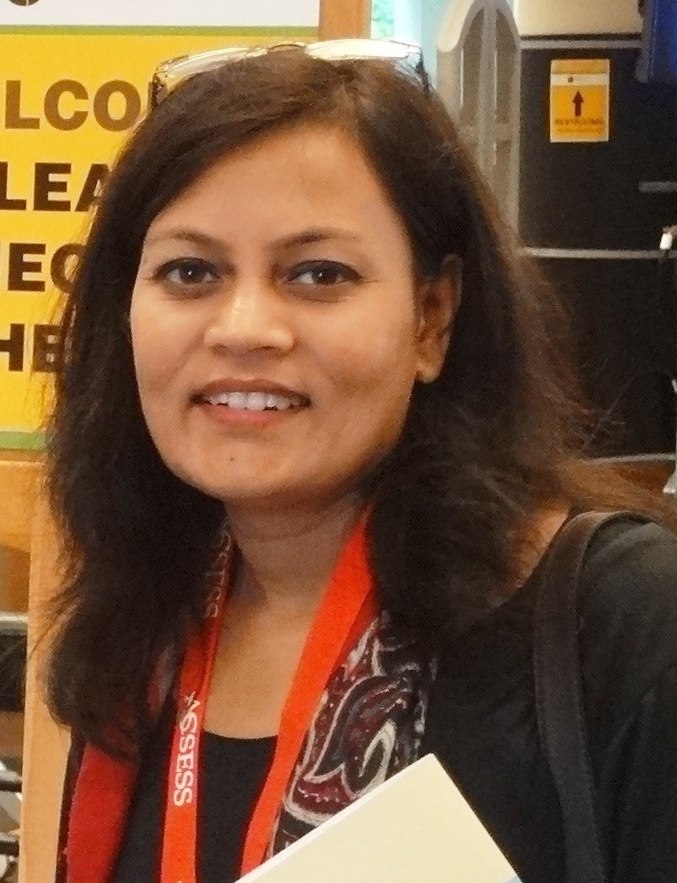
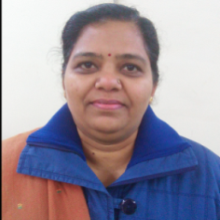
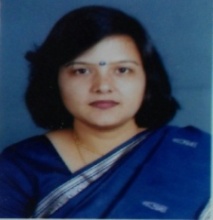
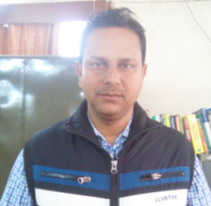
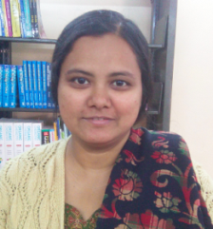
The Library is led by an Officer Incharge / Head, supported by Deputy and Assistant Librarians. The organisational structure is Librarian → Deputy Librarian → Assistant Librarian. Each faculty librarian holds a defined portfolio across acquisition, technical processing, circulation, reference, research support and information-literacy teaching.



E-Resources
Digital products have become powerful complements to the print collection — accessible around the clock, user-friendly and seamlessly linked with other library resources. The library subscribes to e-books, e-journals and databases across Agricultural, Veterinary, Basic and Engineering Sciences, accessible on the campus network and, for bona-fide users, through remote access.
E-Books
E-Journals
Databases
CAB Abstract covers all disciplines of the agricultural sciences (library holds the offline CD set since 1973). EBSCOhost Business Source Elite Plus offers full text from more than 1,100 scholarly business and economics journals. J-Gate Social & Management Sciences (JSMS) indexes over 7 million articles from 12,000+ journals. Indiastat.com provides authentic secondary-level socio-economic statistics on India and its states.
Consortia & repositories
Print Collection
The library holds about 2.6 lakh print books — textbooks and curriculum material, reference and rare books — selected jointly with the faculties. A ground-floor Book Bank offers curriculum books for a full semester (with priority for students from weaker sections), and a Rental Text Book scheme lets UG and PG students borrow up to 10 textbooks for a semester. More than 20,500 theses and dissertations (from 1960) are available in physical form; current periodicals are shelved on the ground floor, with bound back-volumes on the second and third floors.
Book Bank & Rental catalogues
Remote & Trial Access
Trial access to selected journals — through the Consortium for e-Resources in Agriculture (CeRA) and publishers — is offered periodically so patrons can explore the content. Off-campus remote access is available to bona-fide users of the university on written request (with complete credentials) to librarygbpuat@gmail.com.
Journals on trial
One Nation One Subscription (ONOS)
Under the One Nation One Subscription (ONOS) scheme of the Department of Higher Education, Government of India, access to e-journals of 30 major international publishers is available on the campus-wide network (CCF connectivity).
Library Services
To use the library, patrons must be registered members. Students can self-register online and submit a screenshot at the circulation counter as proof of registration. Physical resources such as books and periodicals (excluding CD resources) can be borrowed as per the entitlements below.
Borrowing entitlements
- UG students — 4 books from the general collection (including the Reserved Section) plus 10 from Book Bank / Rental. General books are issued for 15 days and may be renewed.
- PG students — 7 books (including the Reserved Section) plus 10 from Book Bank / Rental for the entire semester.
- PhD students — 7 books for 15 days (including the Reserved Section) plus 10 from Book Bank / Rental for the entire semester.
- Faculty — 12 books including general text-book collection, Reserved Section (overnight only) and some Rental Section titles; teaching books may be issued for one semester.
- Non-teaching staff — 2 books for one month, renewable if required.
Borrow, return & renew rules
- An overdue charge of Re. 1 per book per day is levied; pay at the circulation desk (digital payment via POS is encouraged).
- New Arrivals are displayed for 30 days and become available for loan after the display period.
- Patrons can self check-in and check-out at the ground-floor Kiosk using their Smart Cards; collect the slip and show it at the exit gate.
- The library is under CCTV and an RFID security gate monitors resources at the entrance. On a beep, do not exit — get the books checked at the counter.
- Overnight loans are available in the last working hour of the circulation desk (4 PM–5 PM). Books can also be returned via the 24×7 Book Drop — collect the receipt.
- Report lost Patron Cards to the circulation desk in writing immediately; a new card is issued on payment. Check your issued books and due dates online via "My Account".
WebOPAC / OPAC
The Online Public Access Catalogue is the gateway to library resources. The database of all learning resources is built on the open-source library management system KOHA, and newly acquired resources are added regularly.
Reference & offline (CD) database search
A reference desk on the first floor helps with locating resources and using the OPAC, Kiosk and Book Drop. The library also holds a good collection of offline abstracting databases on CD, accessible from the e-Documentation Section:
- AGRICOLA (Agricultural Online Access) — 1970–1995.
- AGRIS (agricultural science & technology) — 1975 onwards.
- CAB Abstracts (CABI) — all agricultural disciplines, 1973 onwards.
- BIOSIS — life sciences & biomedical, 2003 onwards.
- FSTA (Food Science & Technology Abstracts) — 1969 onwards.
- COMPENDEX (Computerized Engineering Index) — 1990 onwards.
Institutional Repository, Wi-Fi & self-checkout
The Institutional Repository provides online access to more than 8,025 digitised theses, dissertations and project works, plus some rare books, over the campus LAN. Reading spaces offer fast Wi-Fi connectivity for accessing learning resources. The library is automated with an advanced RFID system — Kiosks and a 24×7 Book Drop enable self-checkout and check-in with a smart card. A Library Cafe (since 2016) on the ground floor lets patrons read over fresh coffee and tea.
Research Help
Every student is expected to respect academic integrity and honesty with respect to the intellectual efforts of others. The library helps you document sources of information, choose citation styles, use reference-management tools and check your work for plagiarism.
Citation styles
Reference managers & writing tools
Zotero collects your research in a single searchable interface (images, audio, video, PDFs, web snapshots). ZoteroBib builds a bibliography instantly with no account or install. Mendeley organises, reads and annotates documents and enables collaboration. EndNote (Clarivate) stores and shares references with a 30-day free trial. Grammarly helps eliminate grammatical errors and improve word choice.
Plagiarism detection
The university provides the DrillBit plagiarism-detection software to check plagiarism of theses, research articles, project reports, project proposal etc. of students and faculty members. The DrillBit account has been provided to all the PhD supervisors through the INFLIBNET Centre, Ahemdabad to check the plagiarism of PhD theses and related research articles. For checking the plagiarism of PG (M.Sc./M.Tech./M.V.Sc./M.F.Sc. etc.) theses and research articles all the HoDs have been provided the subscribed DrillBit account. Research students may contact to their research advisor/HoD to check plagiarism of theses, research articles, project work etc. In case of any login related issue or any kind of assistance, please contact Dr. Pankaj Kumar Singh, Assistant Librarian/University Coordinator – DrillBit on email-id plagbpuat@gmail.com, Mobile No. 9839045238.
Current awareness
New books are displayed in the first-floor reference area for two weeks; browse the latest titles by month through the OPAC / WebOPAC. The library also shares day-to-day activities and updates through its Facebook page.
Open Educational Resources
Freely accessible digital libraries, open-access repositories, e-books, directories and reference tools for learners and researchers.
Digital libraries & databases
E-books
Directories & reference
Video Guide
Short video tutorials on using the library’s RFID circulation, QR-code services, online catalogue, institutional repository and digital passbook.
QR Code
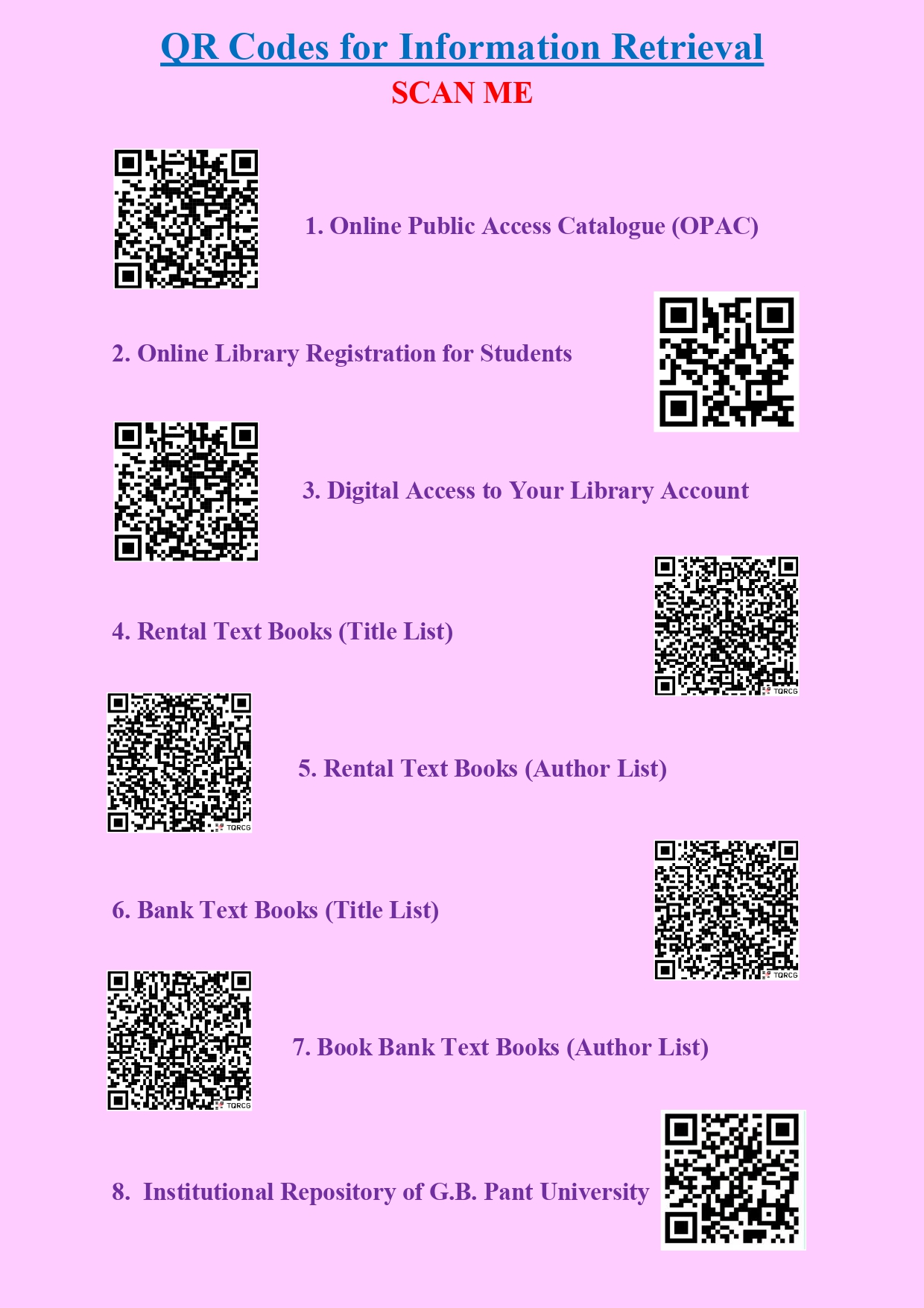
The library has deployed QR codes across its spaces for quick, contactless access to key services — online membership registration, the online catalogue (OPAC), the institutional repository and the digital passbook. Scan the codes on the poster below with your phone camera to reach each service directly.
Gallery
Glimpses of visits, training and outreach events at the University Library.
Event Glimpses (Videos) — 2025–2026
Visits & Outreach (albums)
Ask Us
The library has a reference desk on the First Floor for all kinds of help — locating a resource, using the OPAC, Kiosk and Book Drop, understanding collections, or any other queries you may have. Patrons can also post their queries online through the ‘Ask Us’ form and should expect a reply within 3–4 days.
Upcoming Events
User Awareness Program on ONOS and INFLIBNET Services — 7 May 2026
- Program Brochure: click here
- Target Participants: Academicians, Faculty, Research Scholars/Ph.D. Students of all disciplines, Librarians, Information Scientists, Library and Information Science Professionals, and Nodal Officers (ONOS) from ONOS beneficiary institutions.
- Complete Registration by 4 May 2026: click here
- Organizing Secretary: Dr. K. P. Saxena, Deputy Librarian, librarygbpuat@gmail.com, Mob.: 9473777457, 9354025885
Annual Report
University Library Annual Report 2024–2025
- Annual Report 2024–2025: click here